What Does a TISH Report Mean for Your Chimney in Minneapolis and St. Paul?
On a Minneapolis TISH report, a chimney with missing brick, stone or mortar is marked B, for below minimum. That B is disclosed rather than required, and a chimney the evaluator thinks could fail is marked SC, suggested correction. The required repairs tied to a chimney are on the heating vent side. An unsealed vent entry into the chimney is RRE, and transite vent pipe with substantial deterioration is RRP.
St. Paul’s program is disclosure only. The one required item in a single-family home there is a working hard-wired smoke alarm. The rest of the report, chimney included, is basic information for buyers about the conditions the evaluator saw.
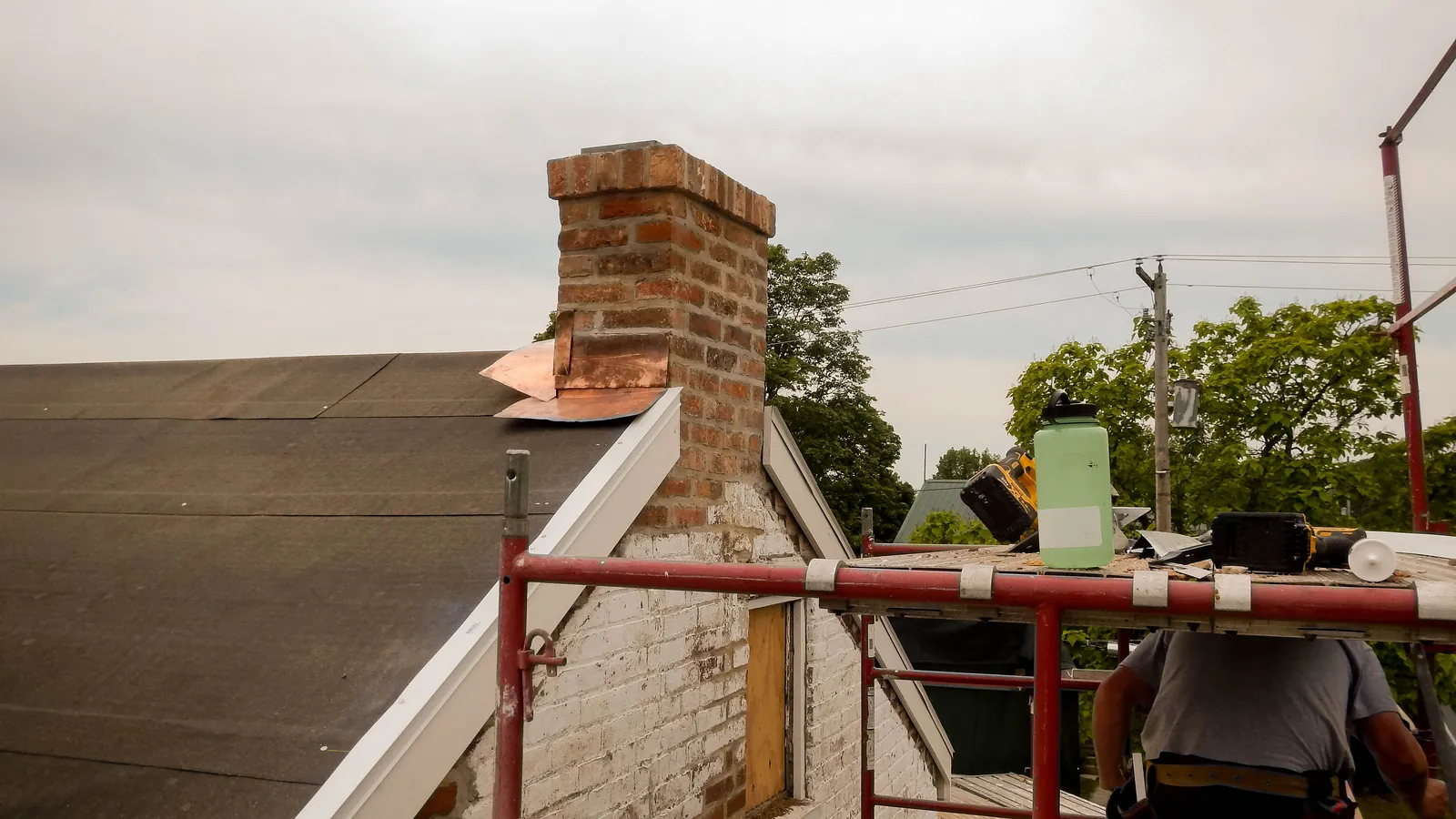
In both cities, the masonry behind a chimney note is the same work. Loose brick and open mortar joints call for chimney repair on the brick and mortar. We price that work in writing after a site visit.
What is a TISH report in Minneapolis and St. Paul?
TISH stands for Truth in Sale of Housing. Minneapolis and St. Paul each require a TISH evaluation before a home is sold. A licensed evaluator looks at the house and writes a disclosure report.
In Minneapolis, the program covers single-family houses, duplexes, townhouses and first-time condominium conversions. A full TISH report is required before the property can be shown. The seller hires an evaluator licensed by the city, and the report is valid for two years or one sale.
St. Paul covers single-family homes, duplexes, condominiums and townhomes. The evaluation is done before the home is marketed, and the report is required within three calendar days of listing. Any potential buyer must be able to view it. The report is good for one year and one sale by the owner on the report.
In both cities, evaluators are licensed by the city but are not city employees. They set their own prices. Richfield has a separate Point of Sale inspection that checks the chimney on homes transferring title after October 1, 1990.
How does a TISH evaluator rate a chimney?
Minneapolis evaluators mark each item with a code. M means it meets minimum requirements, B means below minimum, and C is a comment. SC is a suggested correction, for an item that does not meet code where correction is advised. RRE and RRP are required repairs, and LIC means a safety check by a licensed contractor is needed.
St. Paul’s guidelines spell the ratings out. On the chimney lines, an item is marked Below Minimum Standard or Hazardous, or noted in the Comment section.
How each city’s evaluator guidelines rate common chimney conditions. Sources: the Minneapolis TISH Guidelines Policy and Procedures, effective 6/24/2021, and the Saint Paul Uniform Guidelines for evaluators.
| Chimney condition | Minneapolis rating | St. Paul rating |
|---|---|---|
| Missing or loose brick, stone or mortar | B, below minimum | Below Minimum Standard |
| Missing or damaged flashing | Rated under roof covering and flashing, where damaged flashing is B | Below Minimum Standard |
| Height above the roof | B if the chimney does not obviously reach the appropriate height | Masonry chimneys must extend 3 feet minimum and 24 inches above anything within 10 feet |
| Possible structural failure | SC, suggested correction | Hazardous if not structurally sound or in danger of collapse |
| Flue liner with gas heat | C, comment, if no liner is visible from the ground | Below Minimum Standard if a metal liner is rusted or deteriorated |
| Heating vent not sealed where it enters the chimney | RRE, required repair with an evaluator return | Hazardous |
| Transite (asbestos) pipe | RRP when transite vent pipe shows substantial deterioration | Below Minimum Standard for any transite chimney, Hazardous with visible deterioration |
Both cities also mark a chimney down when it has not been kept in a professional state of maintenance and repair. That is a B in Minneapolis and Below Minimum Standard in St. Paul.
In both cities, the chimney rating is a look from the ground. St. Paul’s guidelines have the evaluator check the chimney with binoculars. Its program summary says the evaluator is not required to use a ladder to look at the roof. Minneapolis does not require a ladder either, and rates the roof from the ground and through windows.
Which chimney items must be fixed before a Minneapolis sale?
In Minneapolis, the two required repair codes are RRE and RRP. An RRE repair needs no permit, and the evaluator comes back to check it. An RRP repair needs a permit and a city inspection.
On the chimney, those codes fall on the heating vent. A vent whose entry into the chimney is not sealed is RRE. Transite vent pipe with substantial deterioration is RRP. A B or an SC on the chimney is not a required repair.
Vent sealing and transite pipe are not masonry work. The city’s evaluation checklist says only licensed contractors can do gas or flue (vent) repair or replacement on heating plants. Those two items go to a contractor licensed for that work.
The city sets the timeline. If required repairs are not done before closing, the buyer signs an acknowledgment of responsibility. The buyer submits it to the city within one day of closing, then finishes the required repairs within 90 days. Depending on the repair, an evaluator or a city inspector reinspects the property.
The guidelines add one more rule. By ordinance, the seller does not have to complete the repairs if the house does not sell.
What does a B on the chimney mean for a buyer or a seller?
A B on the chimney is not a required repair in Minneapolis. It still sits on the report, and the seller must display a copy so buyers can see it at showings. In St. Paul, the same chimney shows up as Below Minimum Standard on a report any potential buyer can view.
For a seller, Minneapolis points to a simple option. Before the evaluation, the city suggests fixing anything you can. That way, those repairs will not show up on your report.
For a buyer, a B is a known item to plan for. Decaying mortar causes bricks to crack and allows water to seep in, a national cost guide says. Minnesota runs 80 to 100 freeze and thaw cycles a year.
The masonry fixes behind a B are standard chimney work. Open or missing mortar joints get chimney tuckpointing, which cuts out the failed mortar and packs in new. When the damage is too much for repointing, the top of the stack gets rebuilt from the roofline up. Damaged flashing and a cracked crown each get their own repair.
What do the common chimney fixes behind a TISH note cost?
A national cost guide, HomeGuide, puts the average chimney repointing job at $500 to $2,500. When the damage is too much for repointing, it puts a rebuild from the roofline up at $1,000 to $3,500.
Typical national ranges for the masonry fixes behind a chimney B. Source: HomeGuide’s repointing and tuckpointing cost guide.
| Masonry fix | National range (HomeGuide) |
|---|---|
| Chimney repointing, average job | $500 to $2,500 |
| Chimney rebuild from the roofline up | $1,000 to $3,500 |
| Minimum job fee, depending on project type | $200 to $1,500 |
These are national figures. The guide says size, height, brick condition, mortar damage, roof slope and access move the price of chimney repointing. A small repair can still run into a minimum fee.
Flashing is priced on its own. Published ranges are in our chimney flashing repair cost guide.
When does a chimney need more than a TISH note suggests?
A TISH line is a short rating made from the ground. Some chimneys need more work than the line suggests.
An SC in Minneapolis or Hazardous in St. Paul means the evaluator saw a chimney that could fail. That stack may need a partial or full rebuild. How far down the damage runs sets the scope.
A chimney marked too short may need to be built taller. St. Paul’s rule for masonry chimneys is 3 feet minimum and 24 inches above anything within 10 feet.
With gas heat, Minneapolis evaluators look for a metal or other approved flue liner. A C on that line means they could not see one from the ground. The city’s checklist says only a licensed contractor can get the permit for an improper furnace or boiler flue, while a homeowner can get the permit for a water heater flue. Check the permit with the city first. Our chimney liner installation page explains how a liner fits inside an old masonry flue.
We look at the masonry up close before we quote. You get a written scope and price for the chimney work. Any reinspection stays with the evaluator or the city inspector. Questions about what a report requires go to the city that runs the program.