
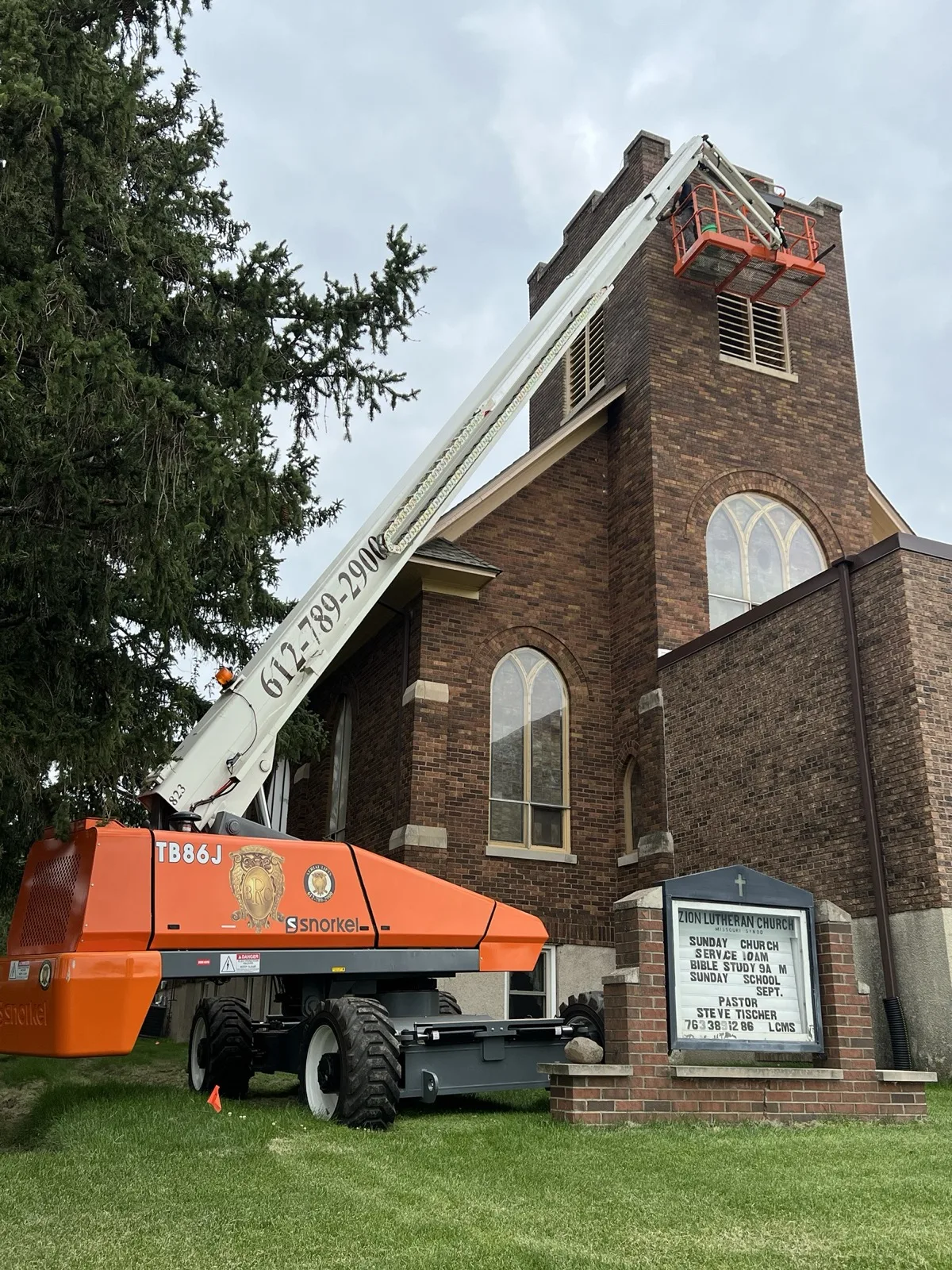
Commercial Restoration
Restoration for factories, apartment buildings, churches, schools and storefronts: wall rebuilds, stone and brick repair, parapets and lintels, run by a crew that works occupied properties.
Learn More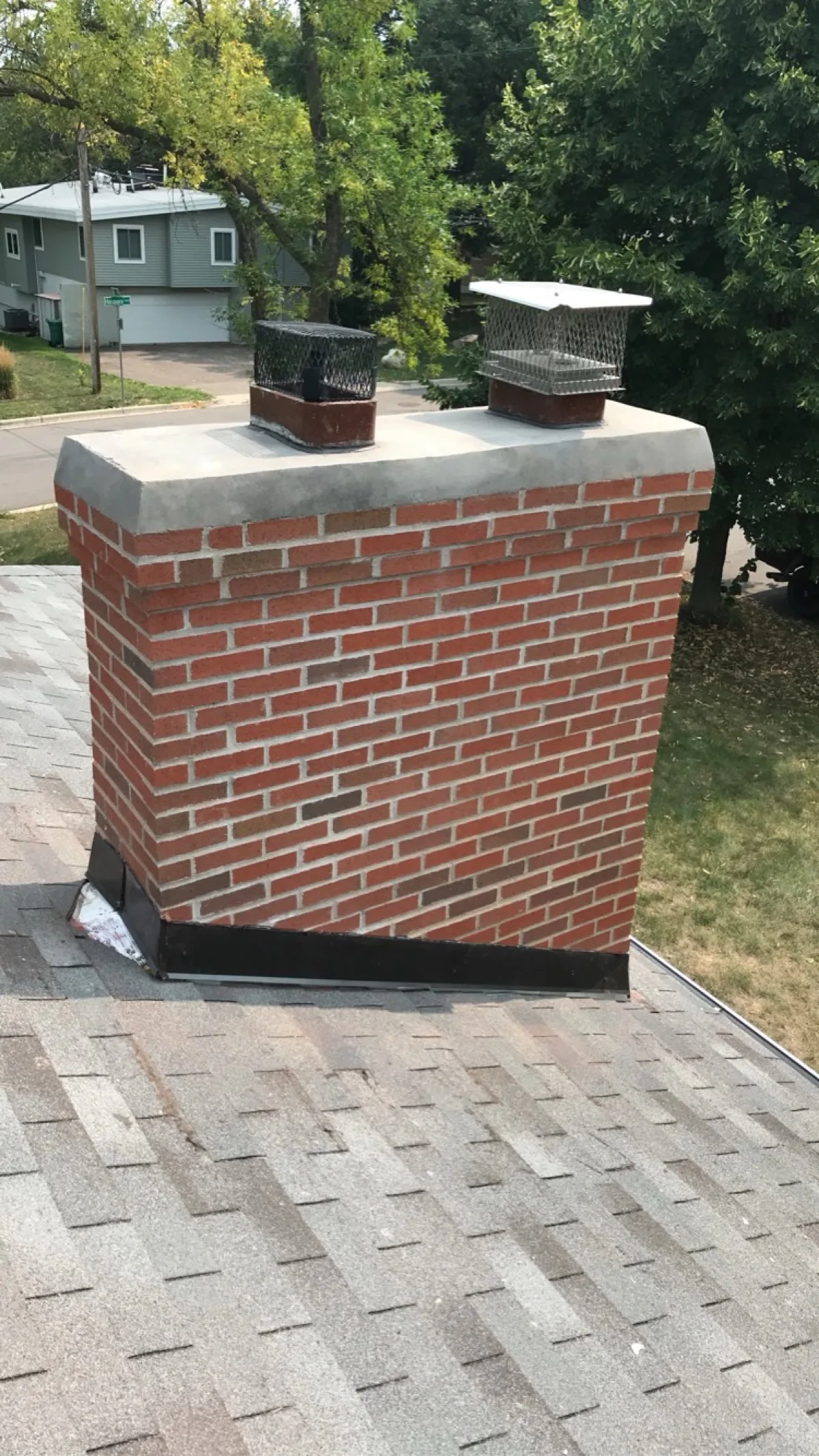
Chimney cap installation in Minneapolis closes the top of an open flue. A chimney cap is the metal cover over the flue tile. It keeps rain, snow and animals out of the stack. Two parts get called a cap. The code uses that word for the concrete top, which the trade calls the crown. On this page a cap is the metal cover. We fit stainless steel single-flue caps, multi-flue covers, and chase covers on framed chases. Rusted caps and caps that blew off get replaced. The rest of the stack sits inside our chimney repair and liner work.
Most calls start with water. Someone sees a stain on the ceiling near the chimney, or rust streaks running down the brick. Others hear birds in the flue, or find the cap in the yard after a windstorm. Some are working from a home inspection report. We get on the roof, measure the flue tiles and photograph the top of the chimney. You get a written scope before we order anything. A cap anchors into the crown, so the crown and the flashing get checked on the same trip. Here is how we repair a cracked chimney crown.
Tell us about your project and we’ll get right back to you.
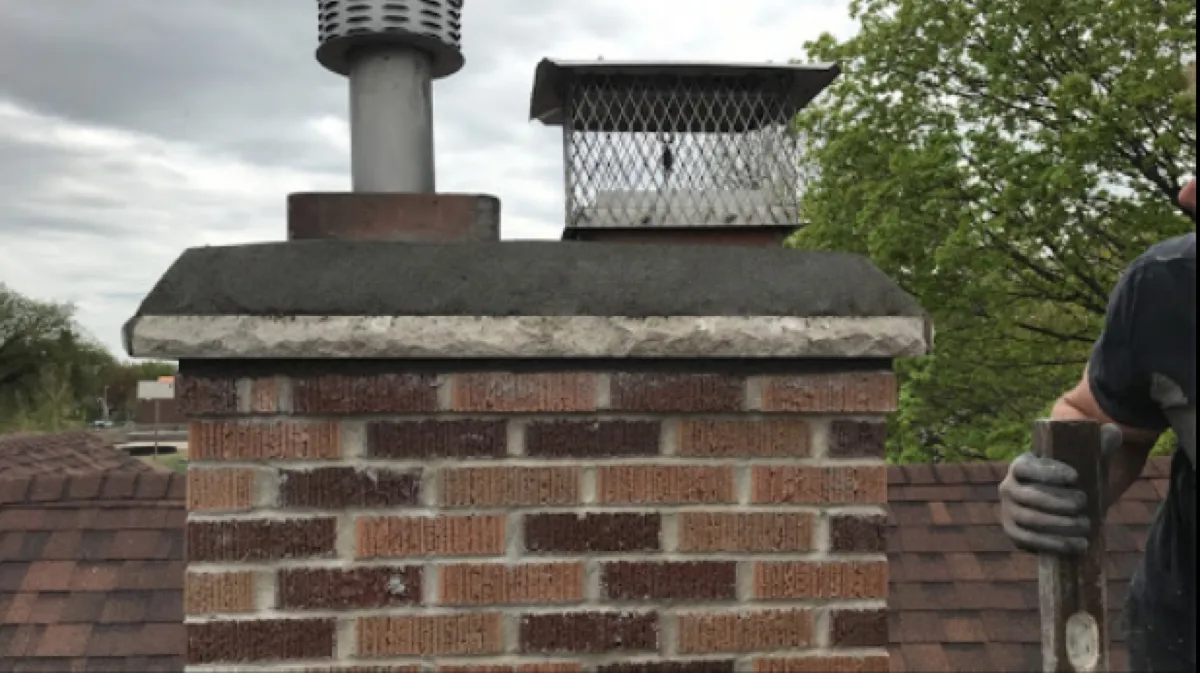
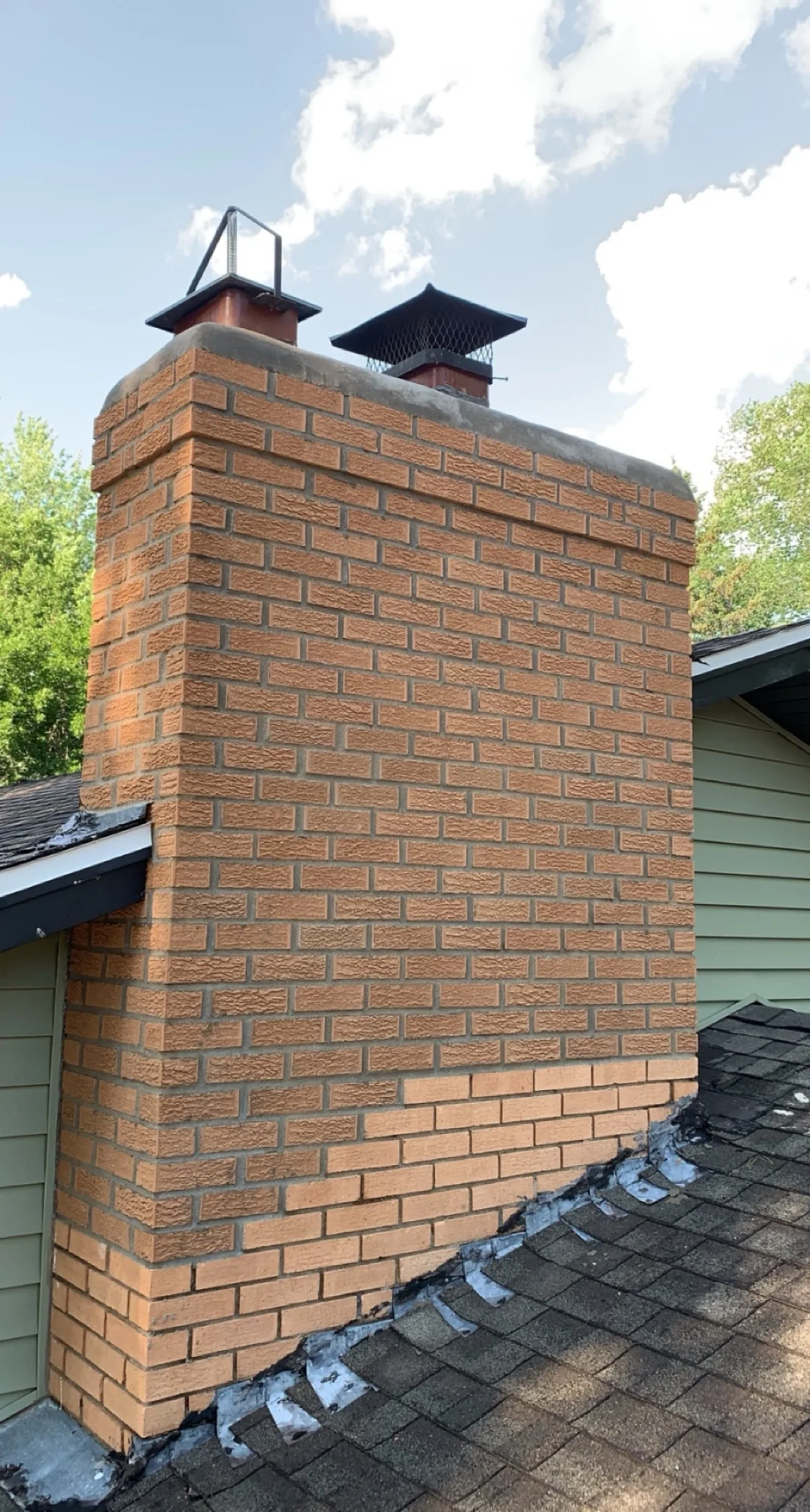
Three cap styles cover most Twin Cities chimneys. A single-flue cap clamps onto the clay tile that stands above the crown. It fits one flue with a sound tile. A multi-flue cover spans the whole top and anchors into the crown. It covers two or three flues under one lid. A chase cover is a flat metal pan over a framed chase. Homes built in the 1990s and 2000s often have one. What sits up there decides which one you get, so we measure before we quote. Finished tops show up in photos from chimney work we have finished.
Metal choice matters more than lid shape. Galvanized steel rusts in our weather, and rust streaks the brick below. We fit stainless steel, which holds up against corrosion. The 2020 Minnesota Residential Code sets the standard we build to. Section R1003.9.2 covers spark arrestor screens. It asks for heat and corrosion resistance equal to 19-gage galvanized steel or 24-gage stainless steel. Section R1003.9.3 asks for net free area under a rain cap of not less than four times the flue outlet. A cap that chokes the flue is a problem, so we size it to the tile.
A cap is only as good as the crown under it. Multi-flue covers anchor into the crown, and single-flue caps clamp to tile the crown holds. So we look at the crown first. Sound concrete takes an anchor and keeps it tight through the winter. We drill, set the anchors and seal each one. A cracked crown or a thin mortar wash gets its own scope before a cap goes on. Soft joints in the top courses come up on the same visit. We repoint those joints with matched mortar while the crew is up there.
Chimney cap replacement runs on two kinds of housing here. Mid-century chimneys carry caps that have rusted at the legs and the screen. Many of those tops were finished with a mortar wash instead of a poured crown. That changes how we anchor the new cap. Newer homes carry a flat chase cover over a framed chase. Those pans hold water at the seams and rust through. We measure the pan on site and fit a new one to it. We see that stock in the chimney work we handle in Maple Grove.
Most Twin Cities chimneys are missing caps. An open flue takes rain and snowmelt straight down the stack. The water soaks the smoke chamber and rusts the damper. It also wets the brick, and Minnesota runs 80 to 100 freeze and thaw cycles a year. Wet brick comes apart in that cycle. The code says masonry chimneys shall be lined, and water works on the liner too. Once the top courses go soft and the tile cracks, the work moves to a rebuild. Here is how we rebuild a chimney above the roofline.
Open flues also draw animals. Raccoons, squirrels and birds get in, and nests block the flue. Chimney swifts nest in masonry chimneys and are protected by the Migratory Bird Treaty Act. That comes from the U.S. Fish and Wildlife Service. Swifts are here from about March or April until August or September. So we look down the flue before a cap goes on. Work over an active nest waits until the birds have gone. The same agency says a metal lined chimney should be capped so birds do not get trapped. Leaves and twigs blow into an open flue as well.
Free, no-obligation estimates across Minneapolis and the Twin Cities metro.
(320) 465-1161From the first look at the site to the final walk-through, here is exactly how it goes.
We assess the masonry where it lives: what failed, why, and how far it has spread. On commercial buildings that means getting on the wall, not a drive-by.
You get a written price with the must-fix separated from the can-wait, so the budget goes where the wall needs it. Timelines and access logistics are spelled out up front.
Matched materials, full joints, proper crowns, real bases and drainage. Occupied buildings stay open, sites get protected, and cleanup happens every day, not just the last one.
We walk the finished work together: joints, matches, cleanup, the whole scope. Done means you have looked at every part of it and said so.
Common questions about chimney caps across Minneapolis and the Twin Cities metro. Don't see yours? Give us a call and we will help.
Restoration for factories, apartment buildings, churches, schools and storefronts: wall rebuilds, stone and brick repair, parapets and lintels, run by a crew that works occupied properties.
Learn More Full and partial chimney rebuilds: deteriorated stacks torn down to sound masonry and rebuilt with new brick, cast crowns and stainless caps.
Learn More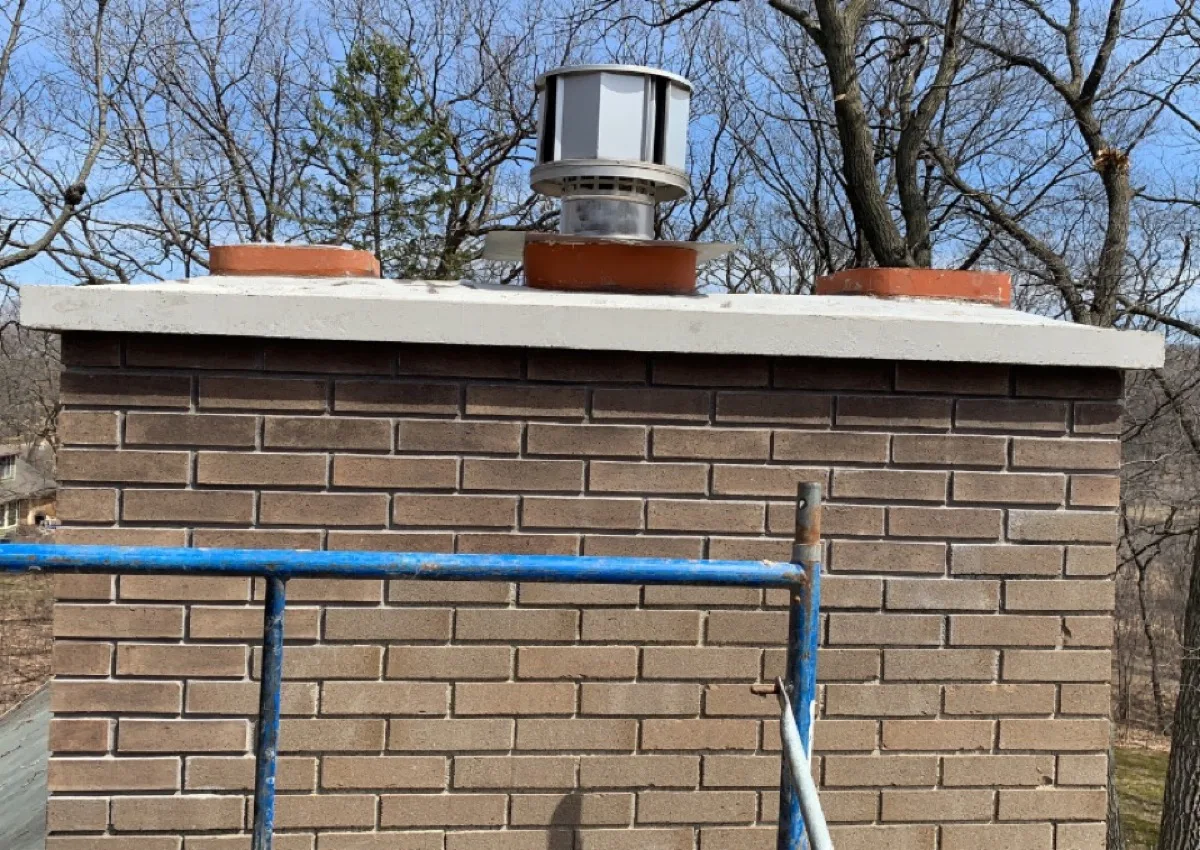
Crown repair, joint repointing, spalled brick replacement, stainless caps and chimney liner systems, the fixes that stop water before it forces a rebuild.
Learn More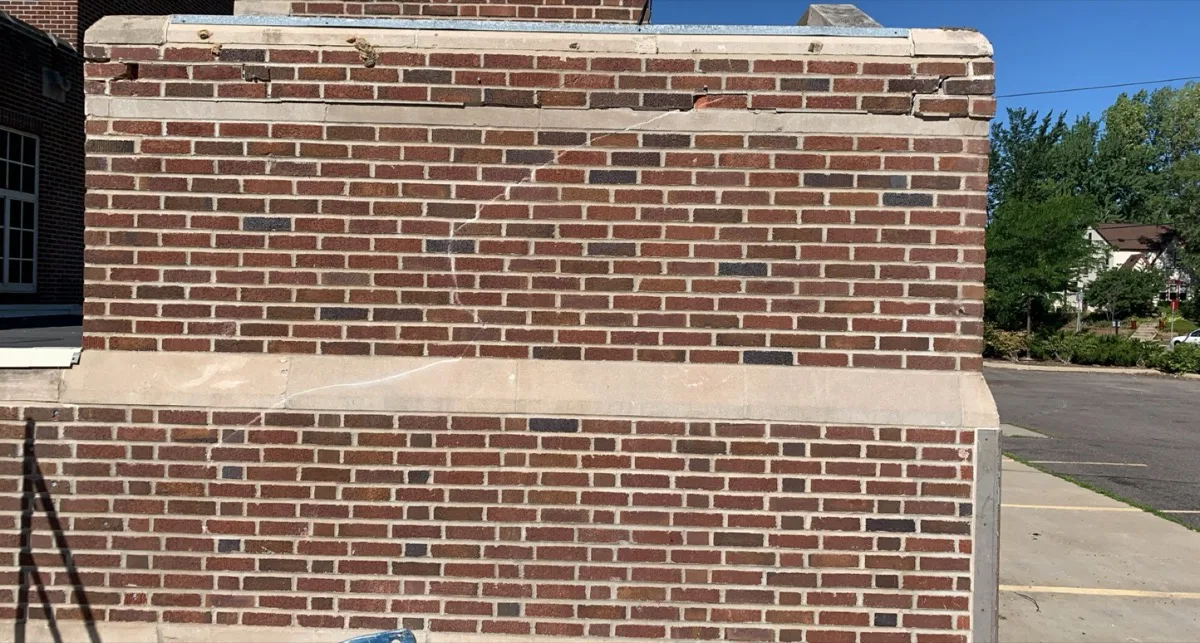
Failed mortar ground out and repointed to match the original on chimneys, houses and full commercial elevations. The fix that saves the wall you already have.
Learn More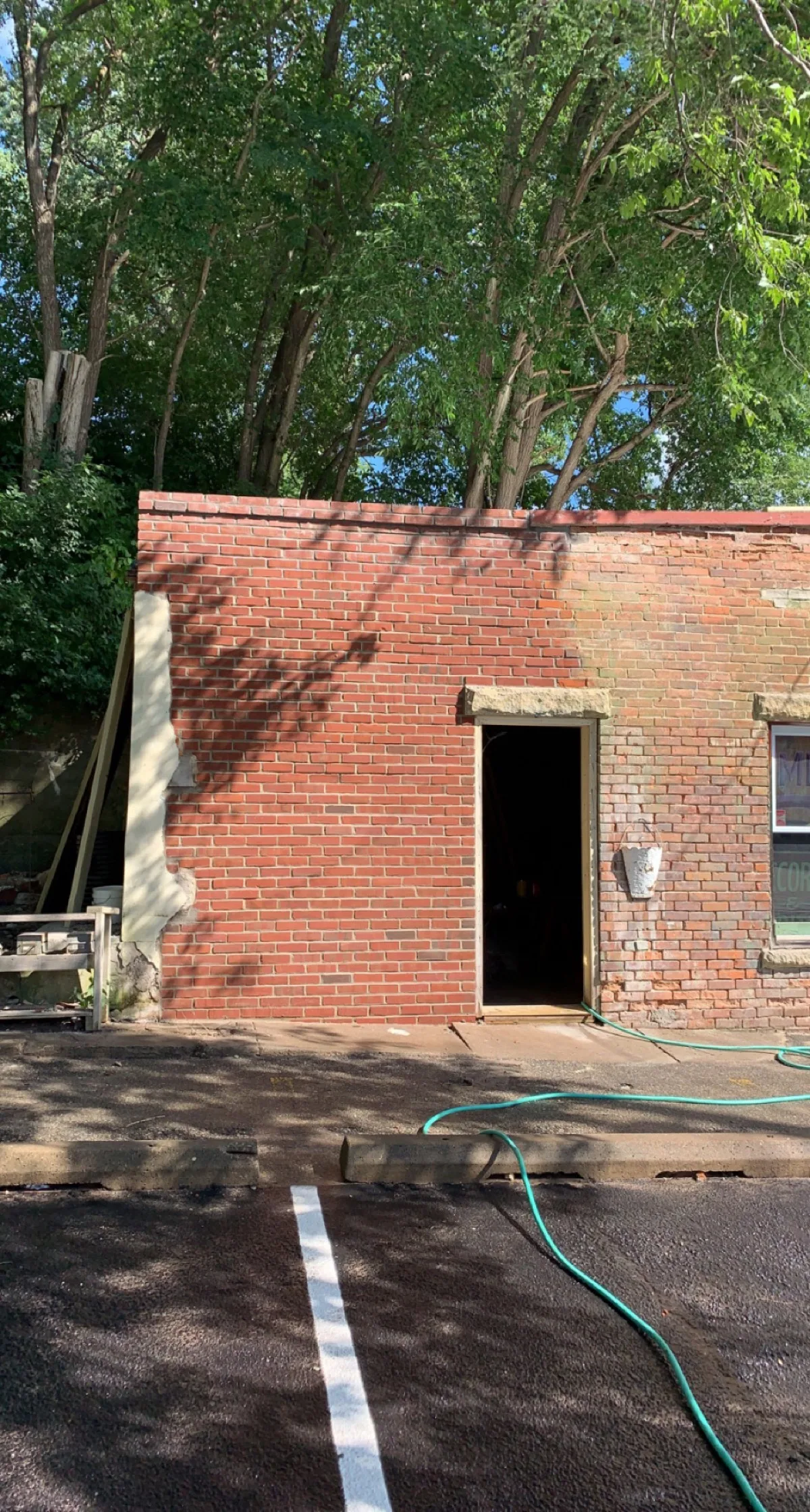
Spalled brick cut out and replaced, cracks stitched, bowed sections rebuilt, porch piers and steps restored, matched so the repair does not read as one.
Learn More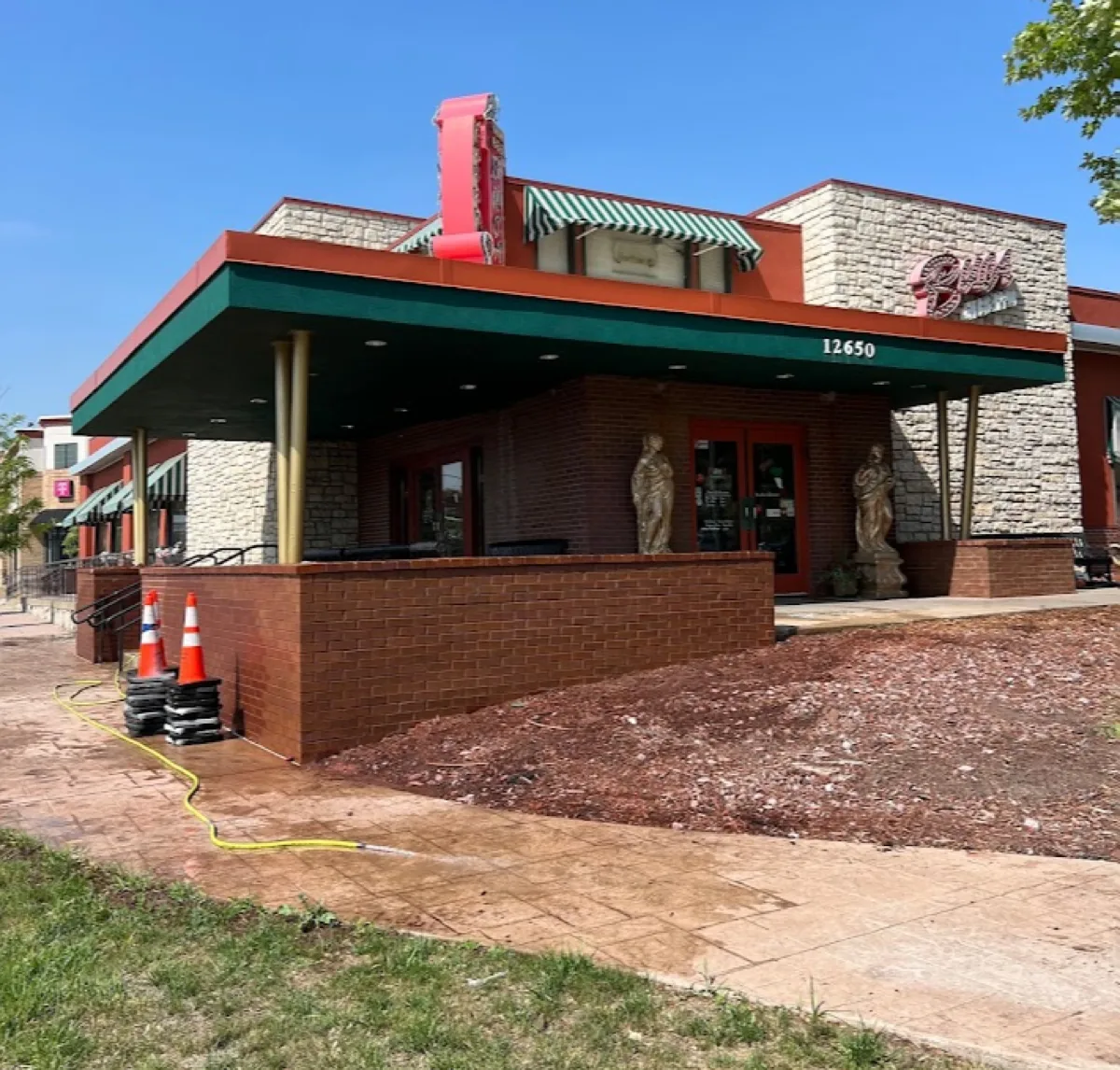
Block and stone retaining walls engineered for Minnesota frost, with proper base, drainage and reinforcement, plus rebuilds of walls that have started to lean.
Learn More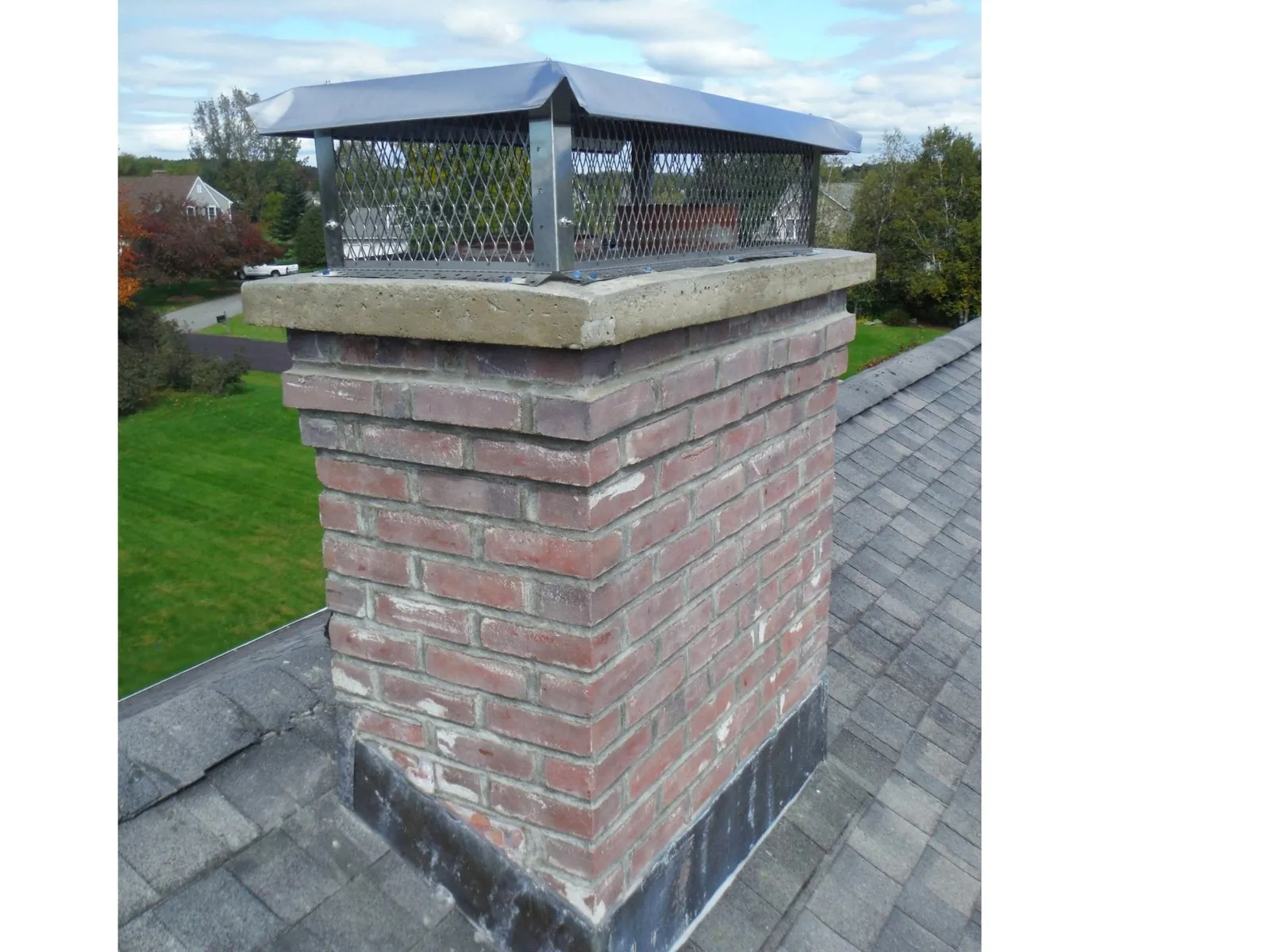
Chimney cap cost in Minnesota by metal, size and flue count, cap alone vs installed, what labor and old cap removal add, and what the state code requires.
Read more →Chimney liner costs by type: stainless steel, cast-in-place and clay ranges, what relining an old flue adds, the Minnesota code rule that masonry chimneys must be lined, and when an older chimney needs one.
Read more →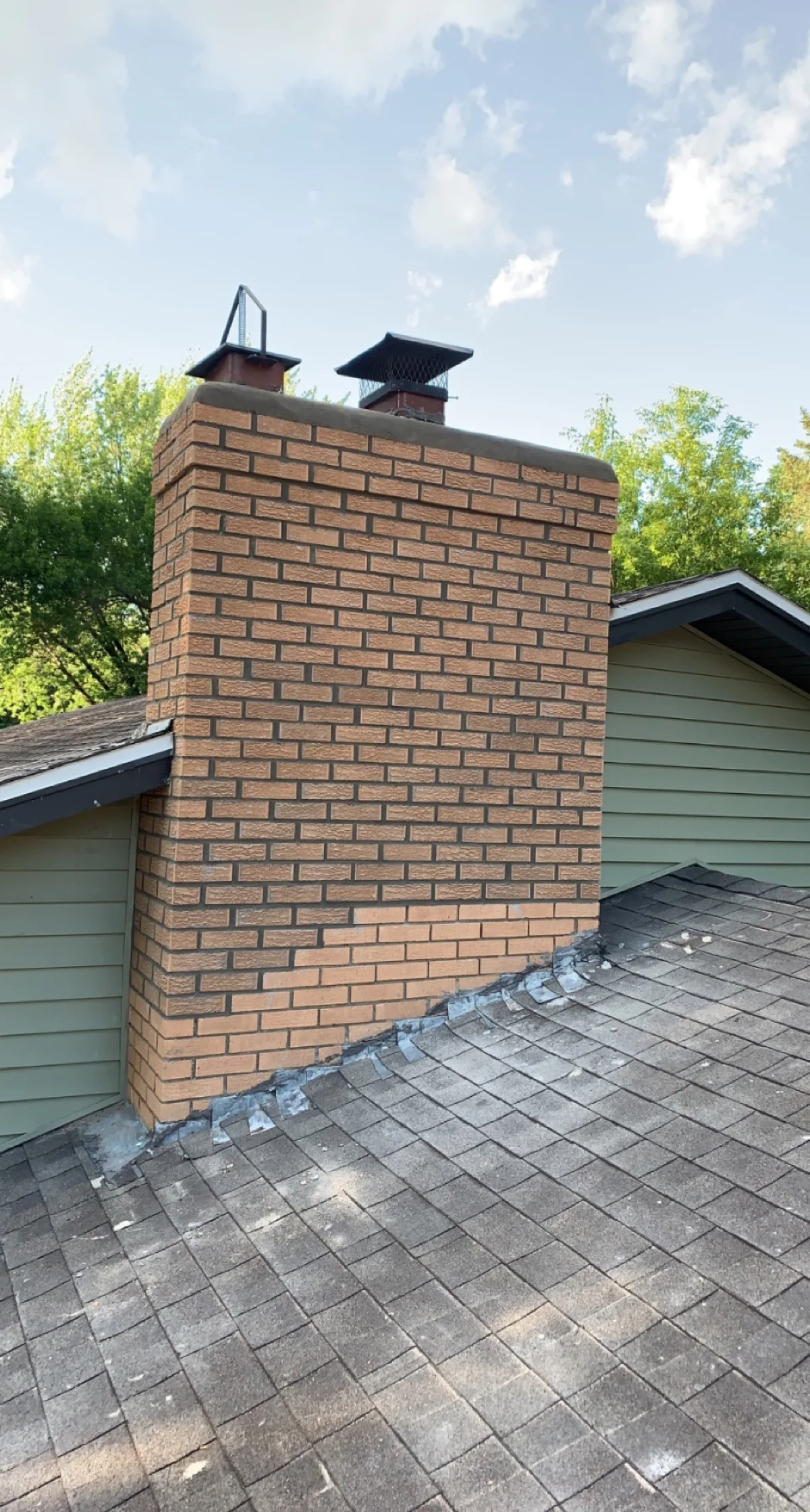
What a chimney crown does, how to tell crown damage from cap damage, when a crack can be sealed versus recast, and published 2026 repair costs.
Read more →Rebuilding walls, chimneys and facades is the core of the work here. Matched brick, matched mortar, proper crowns and full joints, because that is why masonry lasts.
Freeze-thaw is the enemy of every wall in this state. Crowns that shed, joints struck to drain, air-entrained concrete, drainage behind every wall: details chosen for this climate, not a milder one.
We assess on the wall, separate must-fix from can-wait, and put price and timeline in writing. Owners and property managers can phase budgets instead of getting one take-it-or-leave-it number.
Occupied buildings, lifts and scaffolds, site protection and daily cleanup. We run residential jobs with the same discipline as a church tower, because the standard should not change with the address.
A wall that worries you, a driveway past its best, or a backyard ready to become the good part of the house? Call or send the form and we will look at the site with you and hand you a straight written quote.
Tell us about your project and we’ll get right back to you.